Filtered by Oral Health Goal
A bright smile can help you feel more confident, so when a teeth stain appears or your teeth start to look yellowish, it is easy to feel self-conscious. Staining teeth is a common issue, and the good news is that many cases can be improved through a consistent daily routine. This guide explains the types of teeth stains, why a yellow stain on teeth happens, and simple steps on how to get rid of yellow teeth more safely as part of your everyday routine — along with the kind of daily products that can help.
Understanding Teeth Stains
A teeth stain is a change of colour on the surface of the tooth or within the inner tooth structure. Staining teeth usually happens gradually, so it can be hard to notice in the early stages. It can be caused by everyday foods and drinks, certain habits, or natural ageing. 1
It is important to understand that not all stains are the same. How to remove stain from teeth depends on the cause. Some stains sit on the surface and are easier to reduce with good oral care, while others are deeper and are better assessed by a dentist. 2
Types of Teeth Stains
Extrinsic Stains
Extrinsic stains are the most common of the types of teeth stains and occur on the outer layer of the tooth, the enamel. 1
Common causes include:
Stains like these are usually easier to manage with consistent daily care and regular professional cleaning.

Intrinsic Stains
Intrinsic stains occur inside the tooth, in the dentin beneath the enamel. 2 This type of teeth stain is generally harder to reduce, because the colour change is within the tooth structure itself.
Causes include:
Because these stains form internally, they usually do not respond the same way surface stains do.

Age-Related Yellowing
As you get older, tooth colour can change naturally. Over time, enamel can thin from everyday use and exposure to acidic substances. 5 This makes the more yellowish dentin layer underneath more visible. That is why a yellow stain on teeth can appear even in people who look after their oral hygiene well.

Common Causes of Yellow Teeth

Many everyday habits can contribute to a yellow stain on teeth. Understanding the causes makes it easier to decide which steps for how to get rid of yellow teeth suit you.
How to Reduce Yellow Teeth in Your Daily Routine

Step 1: Use a Gentle Whitening Toothpaste Daily
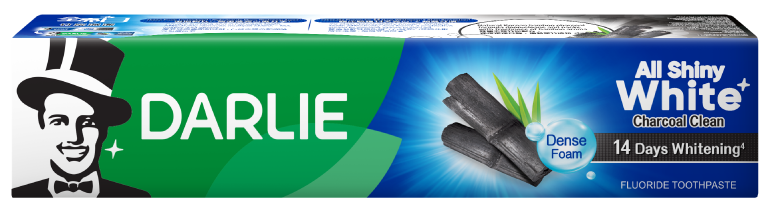
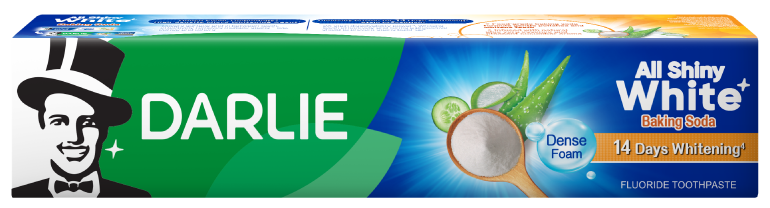
One of the simplest steps is choosing a whitening toothpaste suitable for daily use. Darlie All Shiny White Charcoal Clean Toothpaste is infused with natural bamboo charcoal and formulated with Dense Foam Technology^, designed to help remove extrinsic stains and support a visibly shinier, naturally whiter smile with continued daily brushing twice daily. If you prefer a different flavour, Darlie All Shiny White Baking Soda Toothpaste offers the same Dense Foam Technology^ in a food-grade baking soda formula. Both are designed to help manage staining teeth as part of your daily oral hygiene routine, without feeling too harsh on enamel.
Step 2: Brush Twice a Day With the Right Technique
How you brush matters as much as how often. Brush for two minutes morning and night with a soft-bristled brush, using light circular movements so the clean is thorough without putting excess pressure on your enamel. 5 Darlie Diamond Shine Toothbrush is built for this — its Diamond Polish Core bristles are designed to help remove stains from multiple angles, while a comfortable outer ring of fluffy soft bristles and an ultra-dense bristle count, enabled by Darlie's Ultrasonic Tufting Technology, keep the brushing experience gentle.
Step 3: Floss Every Day
Flossing cleans between the teeth and along the gumline, areas a toothbrush cannot reach. When plaque builds up in these spots, a teeth stain can look more obvious. Flossing consistently helps your teeth look more even and clean.
Step 4: Rinse With Water After Coloured Foods or Drinks
This is a simple habit that helps a lot. After enjoying coffee, tea or richly coloured food, rinsing with water helps clear pigment residue before it settles on your enamel. It is a small step that is easy to fit in throughout the day.
Step 5: Limit Frequent Exposure to Stain Sources
You do not necessarily have to give up your favourite foods and drinks. Instead, try to reduce how long your teeth are exposed to things that stain easily.
Step 6: Book Regular Professional Cleanings
Your home routine matters most, but professional cleaning still plays a big role. A dentist or dental hygienist can remove tartar and surface stains that a normal routine cannot handle. If discolouration becomes noticeably worse or appears suddenly, it is best to get it checked.
Home Care vs. Professional Care
Home Options
Home care works well as a first step for mild surface stains. It usually involves:
Professional Care
If a teeth stain does not improve with home care, or if the discolouration looks deeper, a dentist visit may be more suitable. A dental professional can advise on in-clinic cleaning and polishing, or other options based on your situation, especially for more noticeable intrinsic stains.
Choosing the Right Approach
The right approach depends on the types of teeth stains you have. Extrinsic stains are usually easier to manage through daily habits and professional cleaning, while intrinsic stains are better assessed by a dentist. If you have sensitive teeth or a sudden change in colour, avoid trying too many products on your own without professional advice.

Myths and Mistakes to Avoid
Myth: Harsher Products Work Faster
Many people assume a more abrasive product will clear stains faster. In reality, materials that are too abrasive can wear down enamel and make teeth look yellower over time as the layer underneath becomes more visible. 5

Myth: Lemon or Acidic Ingredients Are Safe for Whitening
Using lemon or other acidic ingredients on your teeth is not a safe option. Acid can erode enamel and increase tooth sensitivity. 6

Myth: Brushing Harder Removes Stains Better
Brushing harder does not necessarily clean better, and can affect your enamel over time. A gentle but consistent technique — such as brushing with the soft, fluffy bristles of Darlie Diamond Shine Toothbrush — is far better for long-term care.

Common Mistakes

Prevention Tips

The best long-term approach to how to get rid of yellow teeth is reducing the chance of stains forming in the first place.
When to See a Dentist

Many cases of staining teeth can be managed at home, but some situations are worth having checked:
Remember, not every colour change is purely cosmetic. If it persists or looks unusual, a professional check is the safer step.
Conclusion
Understanding the types of teeth stains is the first step to choosing the right care. Whether you are dealing with a surface yellow stain on teeth or a deeper colour change, a consistent daily routine can help reduce its impact. Brushing with Darlie All Shiny White Charcoal Clean Toothpaste or Darlie All Shiny White Baking Soda Toothpaste and a Darlie Diamond Shine Toothbrush, flossing daily, rinsing after coloured foods and drinks, and keeping up regular check-ups can all help keep your smile looking cleaner and brighter.
1. Tooth Discoloration: Causes & Treatment | Cleveland Clinic - https://my.clevelandclinic.org/health/sympt^Technology from H&H
oms/10958-tooth-discoloration
2. Tooth - abnormal colors: MedlinePlus Medical Encyclopedia - https://medlineplus.gov/ency/article/003065.htm
3. Nicotine, smoke and patches | British Dental Journal - https://www.nature.com/articles/4813187
4. About Dental Fluorosis | CDC - https://www.cdc.gov/oral-health/about/about-dental-fluorosis.html
5. Translucent Teeth: Causes & Treatment - https://my.clevelandclinic.org/health/symptoms/translucent-teeth
6. Dental Erosion | American Dental Association - https://www.ada.org/resources/ada-library/oral-health-topics/dental-erosion
^Technology from H&H
Frequently Asked Questions
A: The most common causes of staining teeth are coffee, tea, richly coloured foods, tobacco use, inconsistent oral hygiene and natural ageing.
A: For mild surface stains, start with a consistent routine: a daily whitening toothpaste such as Darlie All Shiny White Charcoal Clean Toothpaste or Darlie All Shiny White Baking Soda Toothpaste, correct brushing technique with a toothbrush like Darlie Diamond Shine Toothbrush, flossing, and rinsing with water after eating or drinking.
A: In short, extrinsic stains occur on the outside of the tooth, while intrinsic stains occur inside it. The difference matters because they are not managed the same way. 2
A: Whitening toothpaste can help reduce surface stains, especially milder external marks. For deeper discolouration, a dental assessment may be needed.
A: Approaches like charcoal or lemon need to be used very cautiously. Some ingredients can be too abrasive or acidic, increasing the risk of enamel wear and tooth sensitivity. 6 Darlie All Shiny White Charcoal Clean Toothpaste is formulated as a daily toothpaste rather than raw charcoal, so it is designed for gentler, everyday use.
Recommended Products